
A collaborative platform for intellectual dialogue, wisdom-based learning, and transformative education
The Saturday Study Circle is a weekly academic and reflective gathering organized by the Society Vision for Education & Wisdom. It serves as a collaborative platform for teachers, scholars, researchers, and thought leaders to share insights, engage in discussions, and deepen understanding of various themes related to knowledge, values, society, culture, and Indian Knowledge Systems (IKS).
To provide a free and open space for the exchange of ideas, critical reflections, and scholarly interactions among peers.
To move beyond conventional subject teaching and explore wisdom traditions, value education, and the moral and philosophical foundations of life and learning.
To help members gradually evolve into confident speakers and facilitators who can contribute to wider educational initiatives and outreach.
To rediscover and reinterpret ancient Indian texts, values, and thought systems in a contemporary context, making them relevant to modern education.
To create an informal setting where members learn from one another's perspectives, experiences, and domains of expertise.
To offer a platform for authors and contributors to present their writings, especially those featured in the Society's biannual publications, in an engaging oral format.
This Study Circle is not just a meeting—it is a journey towards shared wisdom, collaborative learning, and shaping a better future through reflective education.
Explore our comprehensive collection of intellectual dialogues, wisdom-based discussions, and scholarly presentations conducted in our Saturday Study Circle sessions.
The Indian Knowledge System (IKS) refers to the vast, interdisciplinary, and holistic tradition of knowledge developed in India over millennia. It combines the ideas of a system (interconnected components with purpose), knowledge (structured understanding transmitted across generations), and Indianness (rooted in Indian ethos and culture). IKS includes philosophical, scientific, artistic, and practical wisdom preserved through texts, oral traditions, and experiential learning. Its hallmark is a balanced integration of theory and practice, science and spirituality, tradition and innovation.
Key components of IKS include the Vedas and Upanishads (spiritual and philosophical insights), Ayurveda and Siddha (health and healing systems), Yoga and Meditation (mind-body practices), Mathematics and Astronomy (contributions like zero and planetary models), Vastu Shastra (architecture), and Arthashastra (economics and governance). It also encompasses performing arts through Natyashastra, linguistic science through Panini's grammar, and various philosophical systems like Nyaya, Samkhya, Mimamsa, and Vedanta.
For a body of knowledge to qualify as IKS, it must originate in India, follow a systematic structure, have generational continuity, practical and theoretical applications, and uphold Indian ethical-philosophical principles. IKS continues to evolve, offering valuable contributions to global knowledge, sustainability, and human development.
This talk explores the philosophical discourse surrounding the status of women through a comparative lens of Western feminist theory and the Indian concept of Dharma, with particular emphasis on the Mahabharata. Drawing upon liberal, radical, and Marxist feminist frameworks, it evaluates how women's oppression has been historically situated within socio-economic and political structures. In contrast, the Indian philosophical tradition, rooted in Dharma, portrays women's societal roles as duties embedded within moral codes.
The study identifies striking parallels between contemporary feminist concerns and ancient Indian moral paradigms, illustrating that both frameworks, despite differing methodologies, aim to interrogate gender-based inequality. Using textual evidence from Vedic literature and the Mahabharata, the paper shows how women like Draupadi and Kunti served as both victims of patriarchal control and agents of resistance.
Furthermore, it addresses the transformation of women's roles across ancient, medieval, colonial, and post-independence India, contextualizing modern legislative reforms and constitutional rights as a continuation of the Dharma narrative adapted to secular governance. Ultimately, this discourse reveals that while Dharma once upheld women's dignity as moral duty, its failure in contemporary application underscores the need to reconceptualize moral obligations through state mechanisms, legal enforcement, and ethical education. The synthesis of feminist and dharmic paradigms offers a pluralistic and culturally rooted approach to gender justice.
The talk highlighted the profound connection between the Indian Knowledge System (IKS) and music. Rooted in ancient traditions, IKS represents a holistic worldview that integrates philosophy, science, ethics and art. Within this framework, music is not merely an artistic expression-it is a medium for healing, spiritual growth and social cohesion.
Classical Indian music, with its intricate ragas, is deeply tied to nature and emotion. It has therapeutic applications in Ayurveda, spiritual significance in devotional movements like Bhakti and Sufism and educational value in our cultural heritage. Music in IKS promotes mindfulness, discipline and inner harmony.
In today's academic discourse, embracing music as part of IKS allows for interdisciplinary learning, connecting tradition with contemporary educational needs. It encourages students to appreciate their cultural roots while developing emotional intelligence and creativity.
Through inclusive and innovative educational practices, we aim to make IKS and its musical legacy meaningful and accessible to future generations.
The teachings of Lord Krishna in the Mahabharata, particularly in the Bhagavad Gita, offer profound insights into leadership and governance that remain highly relevant today. Krishna's doctrine emphasizes dharma (righteousness), nishkama karma (selfless action), and the pursuit of collective welfare over individual gain. A true leader, according to Krishna, is one who acts without attachment to personal success or failure, focusing instead on the greater good of society.
Krishna's guidance to Arjuna highlights the importance of clarity in decision-making, moral courage, and strategic thinking. Modern leaders can draw inspiration from Krishna's role as a sakha (friend), sarathi (guide), and diplomat, showcasing that leadership is not about wielding power but about serving others with wisdom and integrity. His diplomatic efforts before the war illustrate the value of negotiation, conflict resolution, and ethical governance.
Furthermore, Krishna's teachings stress resilience, adaptability, and leading by example. In today's fast-changing world, these principles encourage leaders to balance material progress with ethical values, ensuring justice, harmony, and inclusive growth. The Krishna Doctrine thus stands as a beacon, offering timeless strategies for effective governance and visionary leadership.
In examining the Bhagavad Gita not merely as a scripture but as a manual of leadership, one must consider Krishna's role as a modern archetype of an ideal leader, leading Arjuna to light. His interaction with Arjuna on the battlefield of Kurukshetra is not simply a theological discourse but a profound model of transformational leadership, ethical clarity, and psychological resilience.
At the opening of the Bhagavad Gita,Arjuna, the great warrior of the righteous Pandavas, faces an existential crisis. He got overwhelmed by grief and paralysed by moral ambiguity and as a consequence was unable to reconcile his Kshatriya (warrior) duty—a righteous war-call—with his personal emotions toward his loved ones. This "sterile confusion" (as T.S. Eliot termed a similar paralysis in modern man) renders Arjuna psychologically incapacitated, almost benumbed, to the point where he forces himself not to take part in the war, even if it means living on alms. Arjuna would be absolutely justified in considering his charioteer-friend Krishna as the touchstone, the il miglior fabbro, transcending him from an ignorant, ignoble state to an enlightened immigrant in this world of delusional realities, where the idea of imprisonment is metaphorically measured not in terms of golden bangles, but in terms of iron handcuffs. Krishna taught him how difficult it is to recognise the bad when it comes disguised as the good and how easy it is to renounce the bad when it comes as bad. Step by step Arjuna realised that he is being tricked by the momentary satisfaction of thinking of himself in higher terms than his contender Kauravas (the ambitious) and how his decision of withdrawing himself from the war will lead him only to an inglorious death like the divine mother Thetis warned Achilles in Homer’s Iliad. As an archetype of almost every modern man fighting for their existential survival everyday, Arjuna, the quasi-divine epical hero of Kurukshetra, (the battle of the brothers of the Kuru dynasty) is confused, indecisive, weak and even a pathetic pseudo-saint questioning his role in exterminating his own kith and kin.
Looking at his baffled state and self befooling attitude (centering his desperate attempt to justify his effortless choice of rejecting his battle-role) towards dharma (righteousness) Krishna starts enlightening Arjuna and witnesses his transformation from ignorance to knowledge. In this journey, among all the other things what is essential for leadership is an objective detachment from the sense of self, an unforeseen selflessness. Listening Krishna and his rational arguments on his ontological enquiries, Arjuna rejoices that the murky east of his ideological sky is gradually getting clearer with the celestial sunshine of an eternal intellect calls conscience and finally he completes the journey of his life from a chrysalis to imago to a butterfly :
Krishna and Rama, two central figures in Indian epics, represent not only divinity but enduring models of human potential and moral evolution. While Krishna is often popularly remembered as a charming flute-player and playful divine lover, the Mahabharata reveals a vastly different side: a wise, strategic, and determined statesman with profound self-awareness and a sense of cosmic responsibility. His character embodies leadership, foresight, and balance between detachment and active engagement.
Rama, on the other hand, remains unaware of his divine nature through much of the Ramayana, yet demonstrates steadfast virtue, integrity, and dharmic living. Unlike Krishna's divine playfulness, Rama's life is marked by sacrifice, restraint, and unwavering commitment to righteousness.
In today's fragmented and materialistic society, both Krishna and Rama offer timeless relevance. Krishna reflects a holistic education system through his life---an integration of intellect, ethics, diplomacy, and emotional depth. Rama and Krishna's journeys through suffering, crisis, and eventual transcendence present them as deeply human figures, yet divine in their responses.
Both avatars exemplify transcendentalism not by denying sorrow, but by transforming it. Their lives illuminate the path from Dharma through Artha and Kama to Moksha, offering contemporary generations enduring inspiration for ethical living and spiritual fulfillment.
This presentation explores a key concept from the Indian Knowledge System---Sakam (desire-driven) and Nishkam (desireless) Karma---and its relevance in today's society. The discussion is structured into three layers for clarity and depth.
The first layer offers a scriptural explanation of these two types of actions based on the teachings of the Bhagavad Gita. The second layer presents a philosophical inquiry into the ethical implications of Sakam Karma---whether actions driven by desires are inherently harmful. The third layer examines whether it is truly possible for ordinary people to perform Nishkam Karma in the context of modern society.
In today's consumer-driven world, where most actions are motivated by personal gain, ambition, or success, the philosophy of Nishkam Karma offers a meaningful alternative. It encourages the cultivation of social responsibility, professional integrity, familial ethics, and civic duty. Practicing Nishkam Karma helps individuals rise above self-centered motives and move toward a broader moral consciousness.
Drawing from Indian ethics and the Karma Yoga of the Bhagavad Gita, this presentation highlights how ancient Indian thought can offer timeless guidance for building a just, ethical, and spiritually grounded society.
Dr. Amrita Dam's presentation explores Rasayanashastra, a vital branch of Ayurveda focused on rejuvenation, longevity, and holistic well-being. Rooted in ancient Indian philosophy, this discipline integrates therapeutic, preventive, and promotive health strategies. The goals of Rasayana Chikitsa include disease elimination (Rogahara), bodily rejuvenation (Kayakalpa), improved lifespan (Āyurbhṛiddhi), immunity enhancement, and overall vitality. Foundational contributions from sages like Charaka, Sushruta, and Nagarjuna illustrate the union of Ayurveda, metallurgy, and ethical living.
Key formulations---such as Rasasindūra, Makaradhvaja, and Basanta Kusumākara Rasa---combine purified metals like mercury, gold, and sulfur with herbs to treat chronic diseases and support rejuvenation. Rasayana therapy includes four types: Kamya (for wellness), Naimittika (for specific diseases), Achara (ethical conduct), and Kushta (for skin disorders). Achara Rasayana particularly emphasizes truth, self-control, and non-violence, asserting that mental faults (Prajnaparādha) lead to illness.
Rejuvenators like Chyawanprash, Ashwagandha, Brahmi, and Shankhpushpi are highlighted, along with methods such as Kutipraveshika, Vatatapika, Ahara Rasayana, and Aushadha Rasayana. Traditional alchemical techniques like Gajaputa ensure safety by detoxifying metals. The study concludes that Rasayanashastra---a blend of science, ethics, and spirituality---offers enduring relevance when integrated with modern healthcare systems.
In India there is no concept of as such arm-chair philosophy. Here philosophy is not just a mere cognitive discussion rather it is way of life. That is why every religion has its own philosophy vis-à-vis every philosophy has its own religion. One of the most mystic and relevant philosophical braches of India is Kasmirian Śavism or so called Trika-Śaivism. There are several braches of Kasmirian Śaivism such as Pratyabhijñā, Spandana, Kaula, Kriya etc but the fundamental quest that contemplate to understand is what is I and what is the relation in between I and this whole universe or Jagat.
Jagat means which is constantly changing. Here Trika Śaivism prescribed Jagat is nothing but the manifestation of ultimate truth or Śiva and the inner essence of self is also Śiva. So we have to realize that everything in this existence is nothing but Śivamaya. Pratyabhijñā branch holds this will only realize through self-recognition i.e. sadānanda rūpa śivo'ham śivo'ham. Śiva is understandable through Śakti which is a dynamic force of Śiva and the entwinement of Śiva Śakti is the root cause of all manifestation. Śiva is simultaneously immanent (viśvamaya) and transcendental (viśvottīrṇa) that plays a vital role trough Prakāśa and Vimarśa behind all creation. So jagat is not māyā but the projection of Śiva.
From a non-theistic or atheistic standpoint, moksha---traditionally understood in Indian philosophy as liberation from the cycle of birth and death (samsara)---takes on a more humanistic and psychological meaning. Rather than viewing moksha as union with a divine being or the soul's transcendence to a spiritual realm, a non-theistic perspective interprets moksha as the liberation of the mind from suffering, ignorance, and attachment.
In this view, moksha is not a supernatural event, but a state of inner freedom and mental clarity achieved through self-awareness, ethical living, and rational understanding. The focus shifts from metaphysical salvation to psychological emancipation---freedom from ego, fear, anger, and greed. The teachings of Buddha, especially in the Theravāda tradition, often resonate with this interpretation, emphasizing nirvana as the cessation of craving and suffering without invoking a creator god.
A non-theist may also see moksha as freedom from societal conditioning and dogma, leading to a life of conscious choice, personal responsibility, and harmonious coexistence. Thus, moksha becomes a lived experience---a state of peace, self-mastery, and authenticity---attainable here and now, rather than a mystical goal after death. It remains a profound ideal for inner transformation and holistic well-being.
The Nāṭyaśāstra, attributed to the sage Bharata, is an ancient Indian treatise on performing arts, encompassing theatre, dance, and music. Composed between 200 BCE and 200 CE, it is considered the foundational text of Indian dramaturgy and aesthetics. The text contains 36 chapters and over 6,000 verses, offering comprehensive guidance on dramatic composition (nāṭaka), stagecraft, acting, gestures (mudrā), costumes, makeup, music, and audience engagement.
Central to the Nāṭyaśāstra is the concept of Rasa, or aesthetic flavor, which refers to the emotional experience evoked in the audience. Bharata identifies eight (later nine) Rasas---such as Śṛṅgāra (love), Karuṇa (compassion), and Vīra (heroism)---each corresponding to a dominant emotional state (bhāva) portrayed by the performer. The goal of drama, according to Bharata, is not mere entertainment, but to educate and elevate the audience spiritually and emotionally.
The Nāṭyaśāstra also outlines detailed techniques of bodily movement (aṅga abhinaya), facial expressions (sāttvika abhinaya), and voice modulation, making it a scientific manual of performance. It treats theatre as a divine art gifted by the gods to humans for moral instruction and emotional refinement. Even today, its principles deeply influence classical Indian dance and theatre traditions like Kathakali, Bharatanatyam, and Kudiyattam.
Organized by: Internal Quality Assurance Cell, Bankim Sardar College, Canning, South 24 Parganas, West Bengal
This national webinar focused on integrating Ayurvedic principles into modern lifestyle for holistic health and well-being. Dr. Lekshmi M K shared insights on preventive healthcare, dietary guidelines, daily routines (Dinacharya), and seasonal practices (Ritucharya) according to Ayurvedic wisdom.
NATIONAL WEBINAR ON YOGA FOR A HEALTHY LIFESTYLE Speaker Dr. Kuntal Ghosh, Assistant Professor, Department of Yoga Manipur University, Manipur
Organized by: INTERNAL QUALITY ASSURANCE CELL, BANKIM SARDAR COLLEGE CANNING, SOUTH 24 PARGANAS, WEST BENGAL
Indian temple architecture has evolved over centuries, reflecting the country's rich cultural, religious, and artistic heritage. Beginning with rock-cut caves like those in Ajanta and Ellora, the style progressed to grand structural temples. The main architectural styles include Nagara (North India), Dravida (South India), and Vesara (a mix of both). Each style is marked by distinct features---shikharas, gopurams, mandapas, and intricate carvings that narrate mythological tales. Temples were not just places of worship but also centers of education, art, and community life.
In today's world, these architectural marvels continue to inspire awe and attract scholars, tourists, and spiritual seekers. They are crucial to preserving India's intangible heritage and serve as a reminder of ancient sustainability practices through locally sourced materials and climate-conscious designs. Moreover, modern architects draw lessons from temple architecture for ecological building, spatial planning, and cultural integration, reaffirming its relevance in contemporary design and social consciousness.
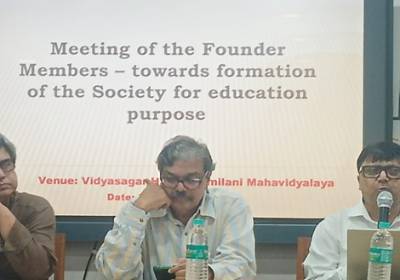
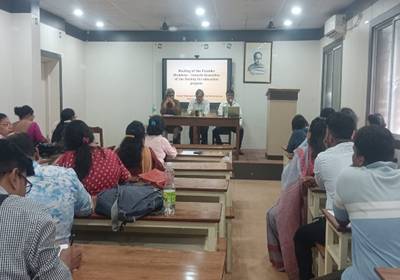
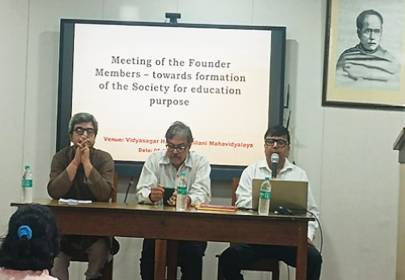
Meeting of Founding Members – Towards Registration of the Society – Vision for Education and Wisdom - to decide the Plan of Action for the year 2025-26
Yoga and meditation are not merely spiritual practices but powerful tools for enhancing physical health, emotional balance, and mental clarity in daily life. When integrated into a regular routine, they improve focus, reduce stress, boost immunity, and promote overall well-being.
Physical Health: Yoga postures (asanas) enhance flexibility, strengthen muscles, and improve posture. For instance, Surya Namaskar (Sun Salutation) when practiced daily, improves cardiovascular health and metabolism. A real-life example is that of Mr. Suresh Kumar, a diabetic patient from Delhi, who managed to reduce his blood sugar levels significantly through daily yoga, combined with a balanced lifestyle.
Mental Clarity and Stress Relief: Meditation calms the mind and reduces anxiety. Ms. Rina Roy, a schoolteacher in Kolkata, shared that daily 15-minute meditation helped her overcome burnout and regain focus during exam season. Mindfulness practices have also been used by corporate professionals to enhance productivity.
Emotional Balance: Breathing techniques (pranayama) regulate emotions and help in managing anger, fear, or sadness. Army veteran Major Arvind Singh credits meditation for helping him cope with post-traumatic stress after retirement.
In essence, yoga and meditation are not only practices for spiritual seekers but vital life tools for students, professionals, homemakers, and elders alike. Their simplicity, affordability, and transformative power make them universally relevant for modern life.
The approach of Rabindranath Tagore towards rural reconstruction during 19th and 20th century was broad-based, holistic and scientific compared to several other approaches. His first encounter with the socio-economic conditions of rural Bengal took place during his tenure at Shilaidaha, Sajadpur and Patisar in East Pakistan (now Bangladesh) as a Zamindar in his family estates. He realized that lack of proper education among the villagers was the principal cause behind their miserable conditions.
Tagore tried to inculcate the Cooperative Spirit amongst the poor farmers and much of his thought process was influenced by the Vedantic Philosophy of ancient India. He wanted to arouse self-respect and self-confidence among the villagers through his lectures, writings, and other activities pertaining to practical Vedanta. He emphasized on the adoption of scientific cultivation and a link between Eastern and Western knowledge so as to break the barriers of self-centered thoughts.
His initiatives at Santiniketan and Sriniketan benefited a large section of local people and tribal communities for uplifting their living standards.
The colloquial dialect 'maachhe vaate bangali' summarises popular choices for foods of the people living in West Bengal. The choice of food items, spices used, time and procedure for eating there are influence of not only of geography and climates of the region, the ancient knowledge from the Indian ancient texts like Vedas, Ayurveda, Manusmriti, Puranas also plays important role in shaping them. In addition, all the choices and practices in Bengali cuisine that have has been shaped by the Indian ancient knowledge can be corroborated with the knowledge of nutrition science.
As depicted in the popular dialect quoted above, no doubt, Bengalis like to eat fish and their staple food is rice, however, from 'sukto' as the starter to finishing items like 'chatni/sandesh' in a meal is not only well balanced with appropriate ingredients for nutrients but also activate gastronomical system for proper digestion and nourishment of body and soul.
Selection of foods from the three types like Sattvic, Rajasic and Tamasic have connection with spirituality, religious practices and rituals that aims to satisfy one's physiological demand for professional achievement as well as for peace and tranquillity of inner soul. There is a strong interconnection and internal logic for selecting the food items, cultural and religious integration, transmission of knowledge and its adaptability with advancement of time makes Bengali cuisine not only a delicious tradition but also deeply rooted knowledge system that reflects the Indian way of systematizing lived experience across health, nature, ethics, and spirituality.
Sādhana Chatuṣṭaya, or the Fourfold Means of Salvation, forms the core preparatory discipline in Advaita Vedanta, vital for cultivating a spiritually and ethically enriched mindset. These principles also offer profound relevance in modern education for both teachers and students.
1. Viveka (Discrimination): The power to distinguish between eternal reality and transient appearances. It encourages critical thinking and inquiry---essential in both spiritual and academic pursuits.
2. Vairāgya (Dispassion): Freedom from desire for results in this life or the next. It nurtures detachment from outcomes, fostering emotional balance and intrinsic motivation.
3. Śātsampatti (Sixfold Inner Wealth):
4. Mumukṣutvam (Desire for Liberation): A strong aspiration for spiritual freedom, mirroring the goal-setting nature of dedicated learners and educators.
Educational Relevance: For faculty: Enhances ethical teaching, reflective practice, and emotional resilience. For students: Fosters discipline, focus, patience, and higher aspirations. This framework inspires lifelong learning, character building, and the pursuit of truth---qualities that define a truly holistic education.